15% off your first order with WELCOMEAS →
Free shipping on orders over $89 →
There is no single wetsuit that is right for every person, every activity or every stretch of water.
A better way to choose is to start with a few practical questions: What will you be doing? What conditions do you expect? How much coverage and movement do you need? And does the suit fit properly?
Use those answers to narrow your choices before worrying about colors, graphics or small feature differences.
Your activity should be one of the first things you consider.
Snorkeling often puts comfort, coverage and easy movement near the top of the list.
Freediving may place more emphasis on streamlined movement and a close fit.
Scuba diving adds the conditions you expect to dive in, time in the water and the rest of your equipment into the decision.
Surfing involves repeated paddling, standing and upper-body movement, so freedom of movement matters throughout the session.
That does not mean every suit labelled for one activity is automatically right for you. Treat activity as the beginning of the decision, not the end.
Water temperature matters, but it is not the only factor.
Also think about:
Treat temperature, activity, exposure and personal cold tolerance as connected factors rather than relying on temperature alone.
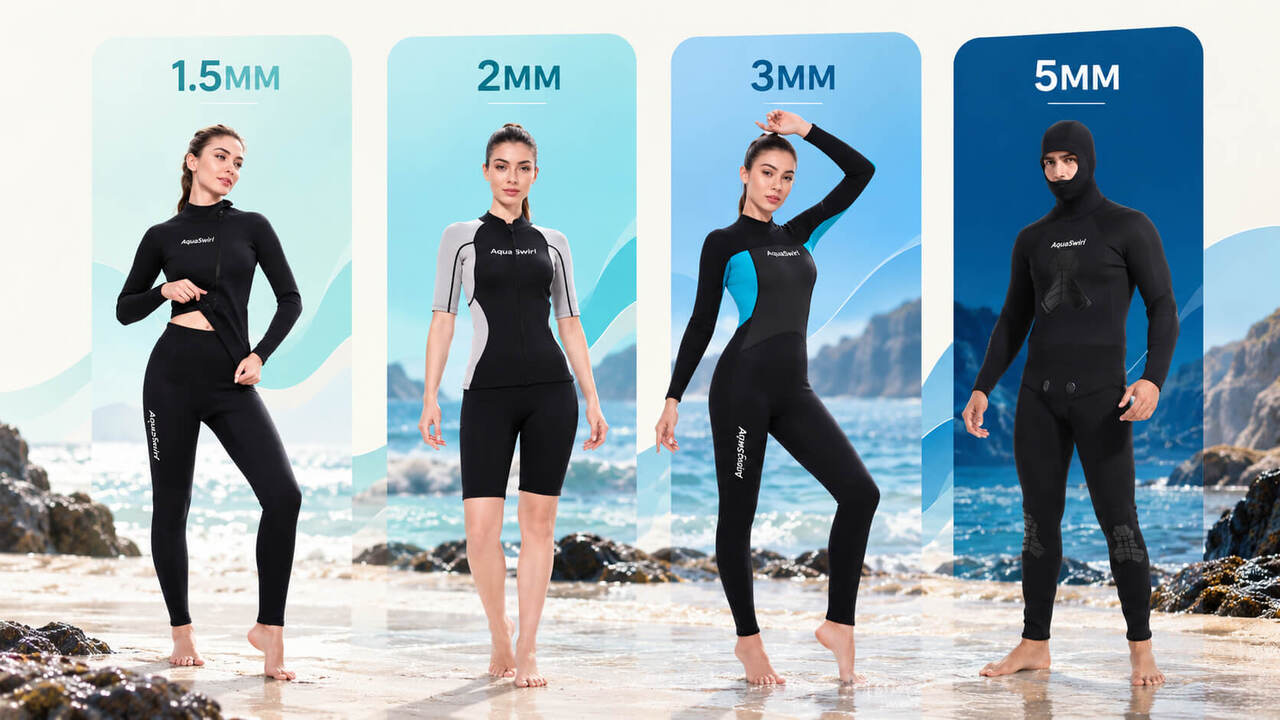
Wetsuit thickness is normally expressed in millimeters (mm).
A simple rating such as 2mm or 3mm describes the neoprene thickness used in the suit. When you see several numbers such as 3/2mm or 5/4/3mm, the suit uses different thicknesses in different areas to balance insulation and movement.
In general, more neoprene provides more insulation, while additional thickness can also affect weight and freedom of movement.
But do not choose only by the number on the label. Construction, seams, fit, activity and personal comfort also matter.
→ Read the Wetsuit Thickness Guide
AquaSwirl currently works across several types of waterwear.
Full wetsuits give more overall coverage.
Two-piece wetsuits separate the upper and lower body and may suit users who prefer a modular setup.
Swim & sunwear is lighter waterwear for swimming, surface use and activities where a full wetsuit is not the goal.
Spearfishing & camo wetsuits are a more specialized category and should be chosen using the individual product’s construction and intended-use information.
Do not assume two suits with similar coverage will feel or perform the same.
Thickness is only one part of a wetsuit.
Useful details to check on the product page include:
Seam construction can change how much water passes through a suit and can affect warmth and comfort, so it is worth considering alongside thickness.
For AquaSwirl products, only use the construction details listed and verified on that product page.
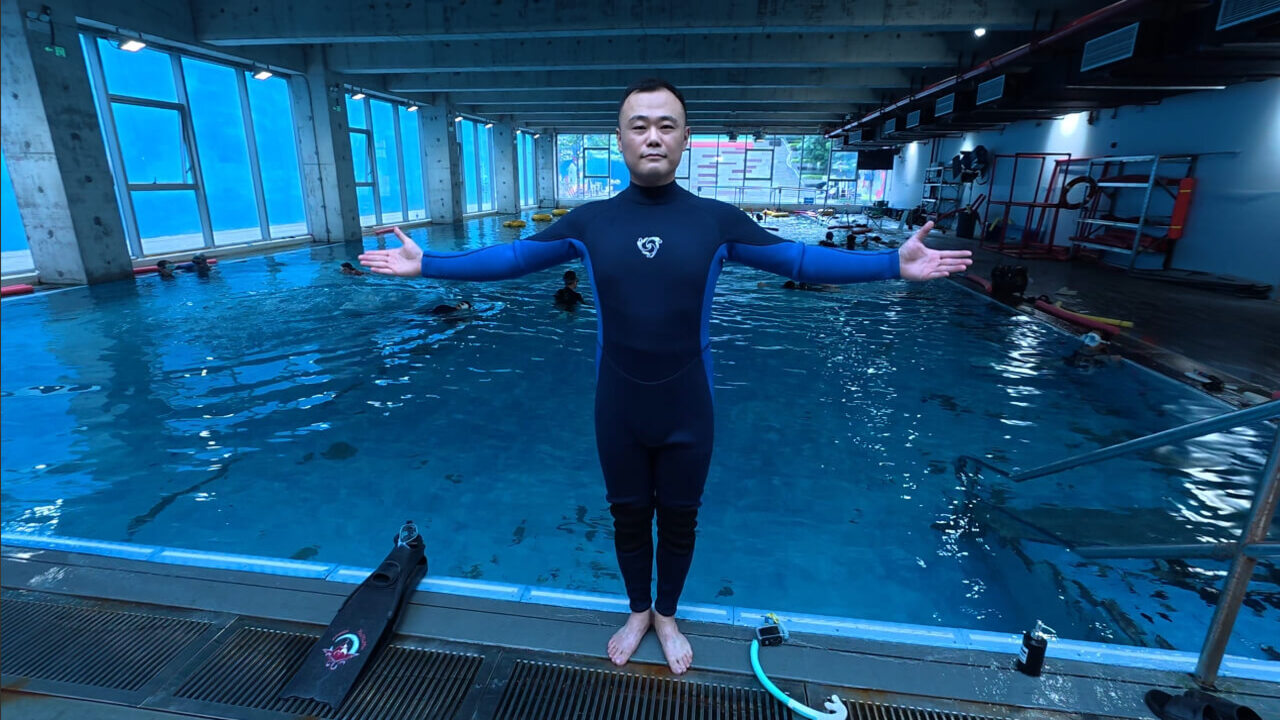
A wetsuit should sit close to the body without excessive loose folds, but it should still allow natural breathing and useful movement.
Pay particular attention to the shoulders, torso, waist, hips, knees and areas where the material bunches.
Do not choose a wetsuit simply from your normal clothing size. Wetsuit sizing varies between products and brands, so use the product-specific size chart whenever one is available. Height, weight, chest, waist and hips should be treated as body measurements rather than garment dimensions.
→ Read: How should a wetsuit fit?
→ Open the Size Guide
Before you order, ask:
Activity — What will I actually do in it?
Conditions — Where and for how long will I use it?
Thickness — Is the thickness appropriate for the product and conditions?
Fit — Does the verified size chart match my measurements?
Construction — Are the seams, entry and materials appropriate for how I plan to use it?
You do not need the most complicated wetsuit. You need one that makes sense for your water.
Use our guides, check your fit, or send us a message if you’re unsure.