15% off your first order with WELCOMEAS →
Free shipping on orders over $89 →
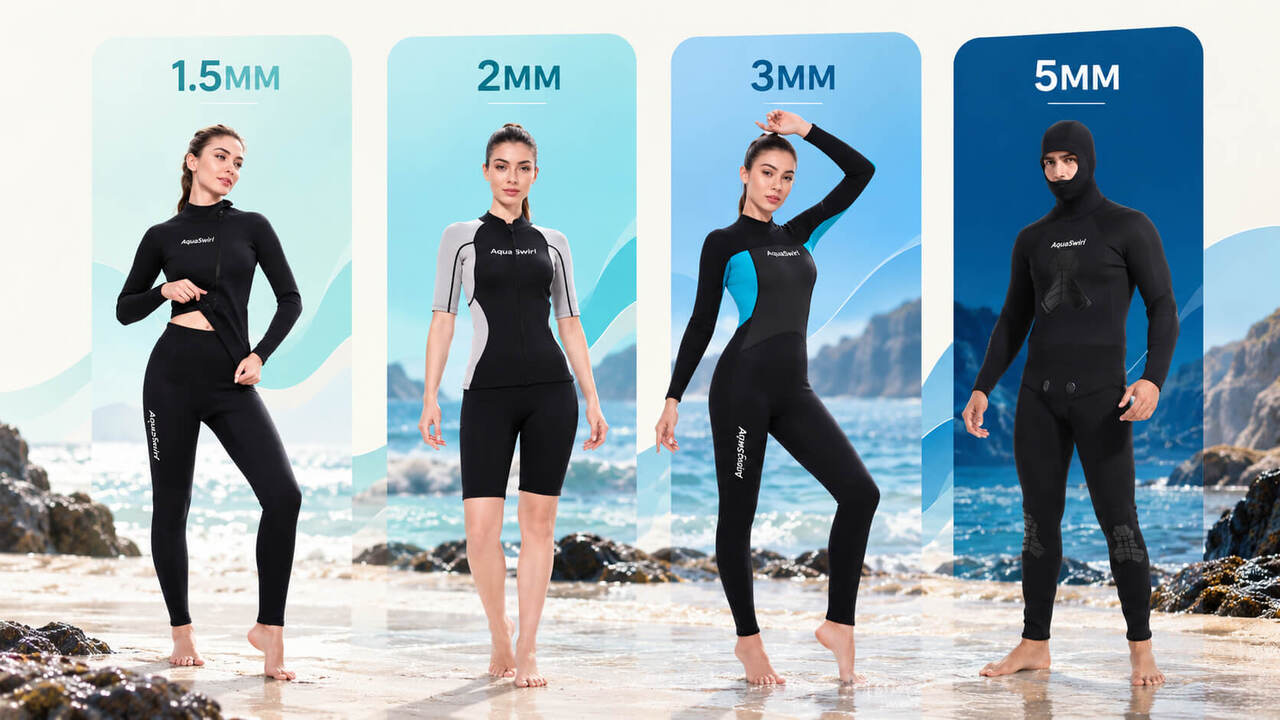
Wetsuit thickness is measured in millimeters, usually written as mm.
A 2mm wetsuit uses neoprene around that thickness where specified.
When you see a multi-number rating such as 3/2mm or 5/4/3mm, different areas of the suit use different thicknesses. This lets designers place more insulation where it is useful while keeping other areas easier to move.
The trade-off is that additional insulation can also bring more material bulk or restriction.
In general, a thicker neoprene construction can provide more insulation than a thinner one.
But “thicker” does not automatically mean “better.”
The right choice depends on the water, the activity and the entire suit.
Also consider:
That is why two wetsuits with the same headline thickness can still feel different in use.
A 1.5mm construction sits at the lighter end of the AquaSwirl thickness range currently being organized.
It can make sense where lighter coverage and freedom of movement are priorities, but suitability still depends on the actual product and conditions.
2mm sits between very light waterwear and thicker full-suit options.
Check whether the product uses 2mm throughout or uses different panel thicknesses in different areas.
3mm is a common wetsuit thickness and appears in many general-purpose water-sport products.
Again, a 3mm uniform suit is not necessarily the same construction as a 3/2mm zoned suit.
Check the individual product page rather than relying only on the product name.
5mm uses substantially more neoprene than lighter 1.5–3mm options and is generally considered for cooler conditions.
The complete setup matters increasingly as conditions get colder—including construction, coverage and accessories where appropriate.
Temperature charts are useful as a starting point, not an absolute promise.
Your current AquaSwirl supplier material shows this reference:
However, I would not publish that as a universal AquaSwirl chart yet.
Why? Because we still need to confirm:
Once those are confirmed, the image can be turned into a much cleaner AquaSwirl chart with a note such as:
Temperature guidance is a starting point only. Activity, exposure time, wind, individual cold tolerance and product construction can change what feels appropriate.
That kind of qualification reflects the fact that temperature is only one factor.
Before choosing, look at:
Activity
What are you doing?
Conditions
What water and weather do you expect?
Fit
Does the suit sit close and comfortably?
Construction
What seams, lining and entry system does it use?
Thickness
Where and how is the neoprene thickness applied?
The number on the label is useful. The complete product matters more.
Use our guides, check your fit, or send us a message if you’re unsure.